
 You’re invited to our new message series, “Numbers, Preparation for the Promise!”
Description: As God leads us on our faith journey from bondage to freedom, He prepares us or tests us along the way. Each test reveals our attitudes, which can be dangerous or healthy. Drawing from the experience of the Israelites who grumbled through the wilderness in the book of Numbers: this series will show how bad attitudes rob us of joy, blessings and are displeasing to God. Complaining, criticizing and coveting are not what our hearts were made for. They were made for thankfulness, contentment, and love. The book of Numbers is a great reminder to keep our eyes focused on Jesus; who’s with us in the wilderness! With Jesus, we can pass the tests of preparation as we await His promises.
Dates Titles Scripture Events
Jan. 4 – Avoid Complaining (Num. 10)
Jan. 11 – Avoid Coveting (Num. 11)
Jan. 18 – Avoid Criticizing (Num. 12)
Jan. 25 – Avoid Doubting (Num. 13) Communion
Feb. 1 – Avoid Rebelling (Num. 16)
Introduction to Numbers:
Everyone knows the shrill whine of a young child—a slow, high-pitched complaint that grates on the eardrums and aggravates the soul. The tone of voice is difficult to bear, but the real irritation is the underlying cause—discontentment and disobedience. As the “children” of Israel journeyed from the foot of Mount Sinai to the land of Canaan, they grumbled, whined, and complained at every turn. They focused on their present discomforts. Faith had fled, and they added an extra 40 years to their trip.
Numbers, which records the tragic story of Israel’s unbelief, should serve as a dramatic lesson for all of God’s people. God loves us and wants the very best for us. He can and should be trusted. Numbers also gives a clear portrayal of God’s patience. Again and again he withholds judgment and preserves the nation. But his patience must not be taken for granted. His judgment will come. We must obey.
As Numbers begins, the nation of Israel was camped at the foot of Mount Sinai. The people had received God’s laws and were preparing to move. A census was taken to determine the number of men fit for military service. Next, the people were set apart for God. God was making the people, both spiritually and physically, ready to receive their inheritance.
But then the complaining began. First, the people complained about the food. Next, it was over Moses’ authority. God punished some people but spared the nation because of Moses’ prayers. The nation then arrived at Kadesh, and spies were sent into Canaan to assess its strength. Ten returned with fearful stories of giants. Only Caleb and Joshua encouraged the nation to “go at once to take the land” (13:30). The minority report fell on deaf ears full of the ominous message of the majority. Because of their unbelief, God declared that the present generation would not live to see the Promised Land. Thus the “wanderings” began. These wilderness wanderings featured a continuous pattern of grumbling, defiance, discipline, and death. How much better it would have been to have trusted God and entered his land! Then the terrible waiting began—waiting for the old generation to die off and waiting to see if the new generation could faithfully obey God.
Numbers ends as it begins, with preparation. This new generation of Israelites was numbered and sanctified. After defeating numerous armies, they settled on the east side of the Jordan River. Then they faced their greatest test: to cross the river and possess the beautiful land God had promised to them.
The lesson is clear. God’s people must trust him, moving ahead by faith if they are to claim his promised land.
Vital Statistics
Purpose: To tell the story of how Israel prepared to enter the Promised Land, how they sinned and were punished, and how they prepared to try again
Author: Moses
Original Audience: The people of Israel
Date Written: 1450–1410 B.C.
 Where Written: In the wilderness during Israel’s wanderings, somewhere in the Sinai peninsula
Setting: The vast desert of the Sinai region, as well as lands just south and east of Canaan
Key Verses: “Not one of these people will ever enter that land. They have all seen my glorious presence and the miraculous signs I performed both in Egypt and in the wilderness, but again and again they have tested me by refusing to listen to my voice. They will never even see the land I swore to give their ancestors. None of those who have treated me with contempt will ever see it” (14:22, 23).
Key People: Moses, Aaron, Miriam, Joshua, Caleb, Eleazar, Korah, Balaam
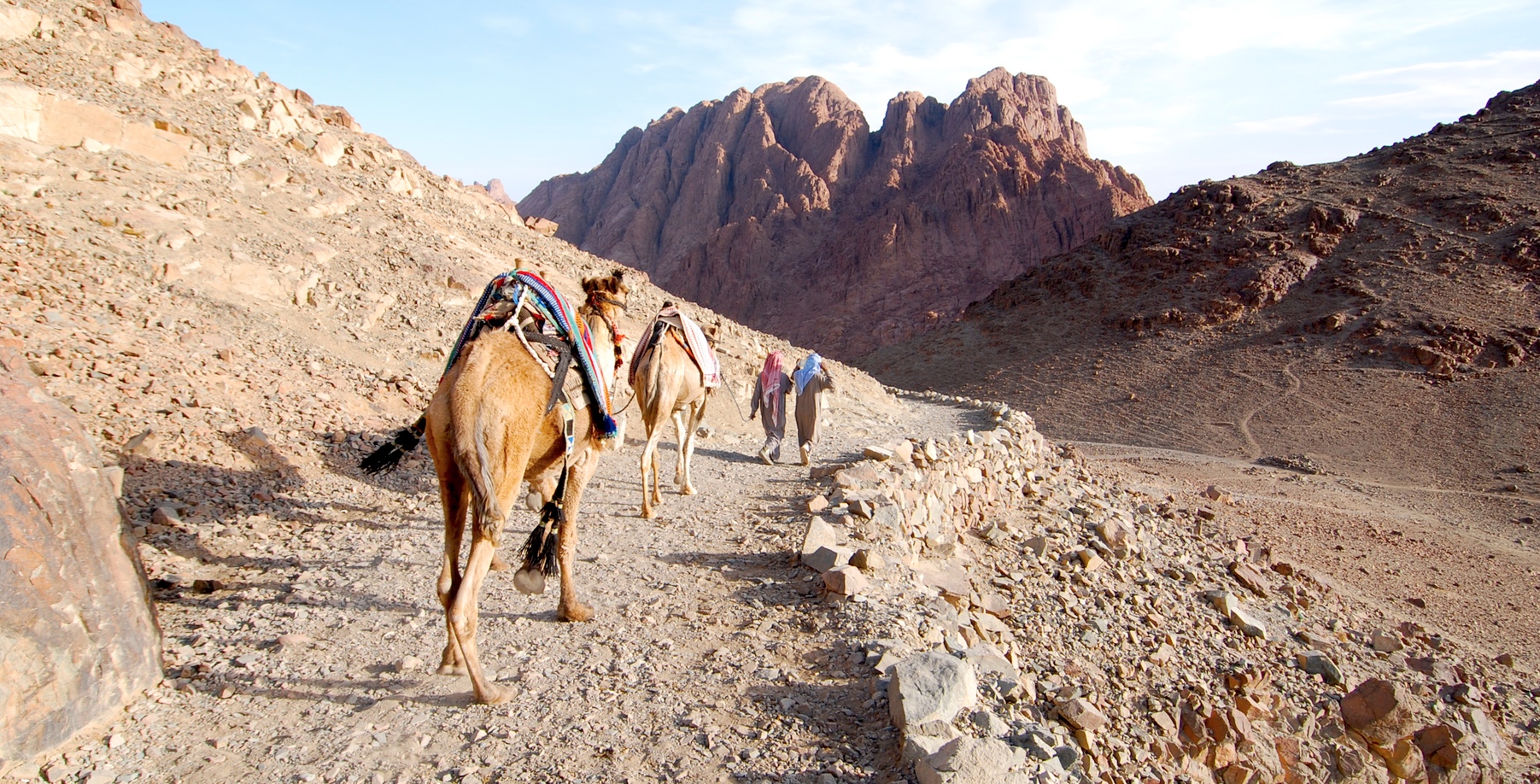 Key Places: Mount Sinai, Promised Land (Canaan), Kadesh, Mount Hor, plains of Moab
Outline
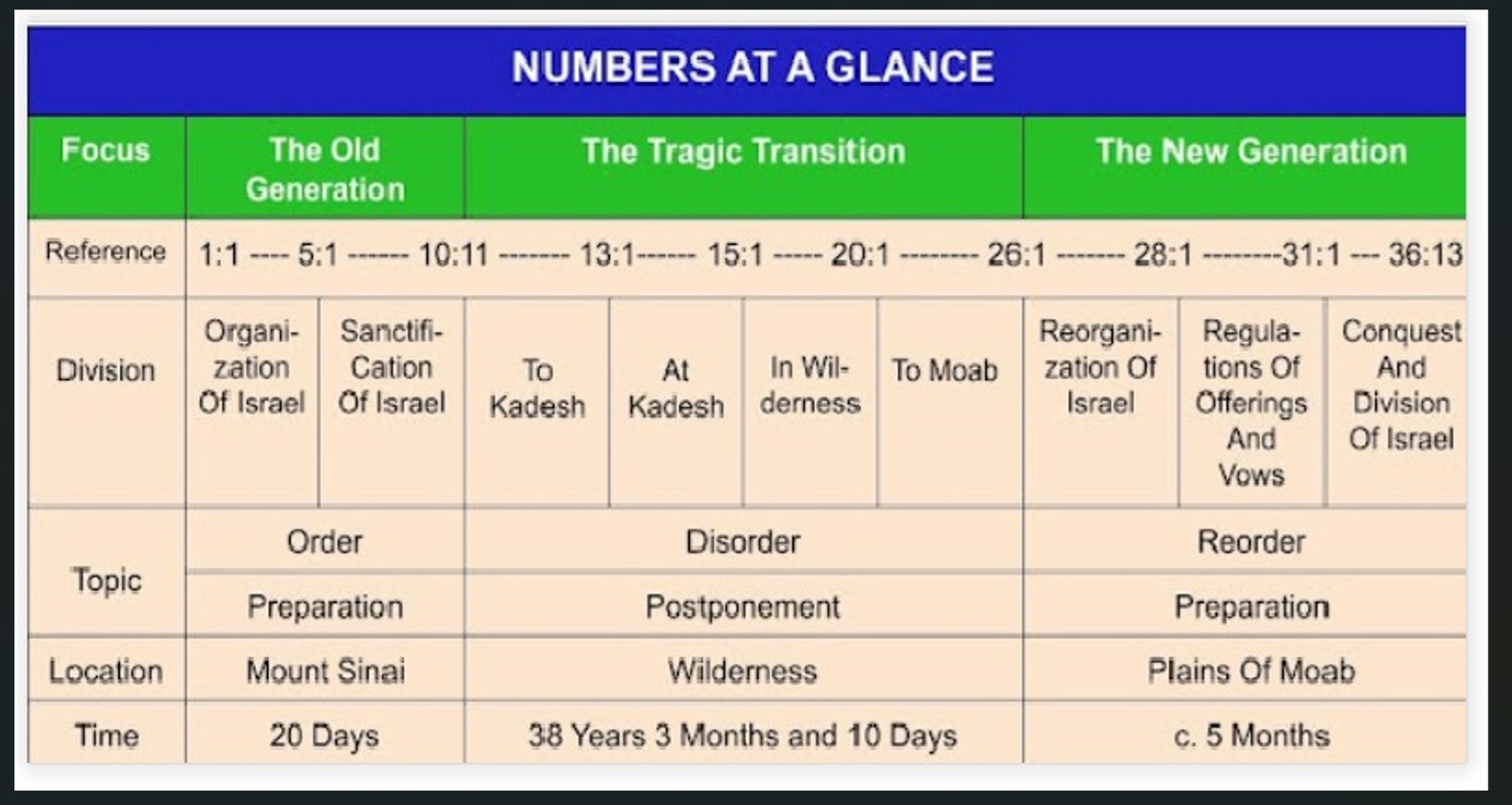 A. PREPARING FOR THE JOURNEY (1:1–10:10)
1. The first census of the nation
2. The role of the Levites
3. The purity of the camp
4. Receiving guidance for the journey
As part of their preparations, the Lord gave strict guidelines to the Israelites regarding purity in the camp. He wanted them to have a lifestyle distinct from the nations around them. He wanted them to be a holy people. Similarly, we should concern ourselves with purity in the church.
B. FIRST APPROACH TO THE PROMISED LAND (10:11–14:45)
1. The people complain
2. Miriam and Aaron oppose Moses
3. The scouts incite rebellion
The Israelites were prevented from entering the Promised Land because of their unbelief. Throughout history, God’s people have continued to struggle with lack of faith. We must prevent unbelief from gaining a foothold in our lives, for it will keep us from enjoying the blessings that God has promised.
C. WANDERING IN THE WILDERNESS (15:1–21:35)
1. Additional regulations
2. Many leaders rebel against Moses
3. Duties of priests and Levites
4. The new generation
When the people complained against God and criticized Moses, they were severely punished. Over 14,000 people died as a result of rebellion against Moses. As a result of Korah’s rebellion, Korah, Dathan, and Abiram and their households died, along with 250 false priests. Dissatisfaction and discontent, if allowed to remain in our lives, can easily lead to disaster. We should refrain from complaining and criticizing our leaders.
D. SECOND APPROACH TO THE PROMISED LAND (22:1–36:13)
1. The story of Balaam
2. The second census of the nation
3. Instructions concerning offerings
4. Vengeance on the Midianites
5. The Transjordan tribes
6. Camped on the plains of Moab
The Moabites and Midianites could not get Balaam to curse Israel, but they did get him to give advice on how to draw the Israelites to idol worship. Balaam knew what was right, but he gave in to the temptation of material rewards and sinned. Knowing what is right alone is never enough. We must also do what is right.
Main Ideas:
Census – Moses counted the Israelites twice, hence the title “Numbers.” The first census organized the people into marching units to better defend themselves. The second prepared them to conquer the country east of the Jordan River.
People have to be organized, trained, and led to be effective in great movements. It is always wise to count the cost before setting out on some great undertaking. When we are aware of the obstacles before us, we can more easily avoid them. In God’s work, we must remove barriers in our relationships with others so that our effectiveness is not diminished.
Rebellion – At Kadesh, 12 scouts were sent out into the land of Canaan to report on the fortifications of the enemies. When the scouts returned, 10 said that they should give up and go back to Egypt. As a result, the people refused to enter the land. Faced with a choice, Israel rebelled against God. Rebellion did not start with an uprising, but with griping and murmuring against Moses and God.
Rebellion against God is always a serious matter. It is not something to take lightly, for God’s punishment for sin is often very severe. Our rebellion does not usually begin with all-out warfare, but in subtle ways—with griping and criticizing. Make sure your negative comments are not the product of a rebellious spirit.
Wandering – Because they rebelled, the Israelites wandered 40 years in the wilderness. This shows how severely God can punish sin. Forty years was enough time for all those who held on to Egypt’s customs and values to die off. It gave time to train up a new generation in the ways of God.
God judges sin harshly because he is holy. The wanderings in the wilderness demonstrate how serious God considers flagrant disobedience of his commands. Purging our lives of sin is vital to God’s purpose.
Canaan – Canaan is the Promised Land. It was the land God had promised to Abraham, Isaac, and Jacob—the land of the covenant. Canaan was to be the dwelling place of God’s people, those set apart for true spiritual worship.
Although God’s punishment for sin is often severe, he offers reconciliation and hope—his love is truly amazing. Just as God’s love and law led Israel to the Promised Land, God desires to give purpose and destiny to our lives.
Source: Life Application Bible Notes (Tyndale, 2007), 199–202.


 Upwards Church